
Proof of Concept FOR Desktop Apps
WWG’s technical POC development for desktop apps is a narrowly scoped piece of engineering that shows whether your desktop application idea can be built, before you commit a development budget. It is for companies that need to prove hardware integration, cross-platform behaviour or local performance. In three to six weeks you get a working prototype, compatibility test results and a report on risks and next steps.
Definition
What is a technical POC for a desktop app
A technical POC for a desktop app is a short, focused build that tests whether the riskiest part of a desktop application idea works in practice, such as talking to a peripheral, running the same way on Windows, macOS and Linux, or handling large local data. It is not a product for end users; it ends in a written verdict on feasibility.
specializations
What we offer
Cross-Platform Validation
Test functionality across Windows, macOS, and Linux.
Feature Prototyping
Create a basic desktop app to showcase critical features.
System Integration Testing
Ensure compatibility with existing software and hardware.
Performance Assessment
Evaluate the app’s ability to handle complex processing tasks.
solution
What You Get with PoC
Ensure Feasibility Before Launch
PoC validates the technical feasibility and market potential of your idea, helping you confidently plan the next steps and reduce uncertainty in your project.
Deeper Understanding of the Product
PoC provides valuable insights into your product's strengths, weaknesses, and limitations, enabling you to prioritize features wisely and save 20-30% of your budget in later development stages.
Mitigate Risks
By identifying and addressing potential issues early, PoC helps reduce business risks by 35-40%, ensuring a smoother development process and increasing the likelihood of success.
Faster Market Entry
With PoC, you can accelerate your product's time to market by 2-3 months, allowing you to gather user feedback before the full launch.
our advantages
Why Choose WWG?
Desktop Experts
Proven expertise in creating robust desktop solutions for various industries.
Multi-Platform Focus
Ensure your app performs consistently across different systems.
Risk Reduction
Identify potential bottlenecks early in the process.
Client-Centric Approach
Every POC is tailored to your specific requirements.
90 %
of startups fail due
to a misunderstanding
of market demand.
42 %
of startups don't survive the
first two years due to technical
or business mistakes.
70 %
of investors consider PoC
essential for evaluating a
business idea before funding.
process
How Do We Work?
Technical Assessment
Technical Assessment
Prototyping
Prototyping
Compatibility Testing
Compatibility Testing
Recommendations
Recommendations
cases
Customer Success Stories
Some concrete examples of the use of our technologies and how our knowledge has been useful to solve critical situations or improve workflows.
What Our Clients Are Saying
WWG successfully delivered a project document and software that fully met RAG requirements. WWG's project management was efficient — they delivered everything on time. Moreover, they showcased clear communication and strong technical capabilities, which were key to the project's success.
Francesco Adinolfi
R&D, Innovaway SpA
WWG provided custom software development services for an ICT company. The team designed and developed an innovative ICT software system capable of supporting RAG services.
The engagement
A desktop POC in concrete terms
- Duration
- Typically three to six weeks, depending on the complexity of the project.
- Start
- After the technical assessment: requirements, obstacles and success criteria agreed in writing.
- Who does the work
- WWG engineers specialised in desktop applications, with a named technical owner for the whole POC.
- What we need from you
- A description of the idea, access to peripherals and systems to integrate, test workstations on the target platforms, one decision-maker.
- Output
- A working prototype of the key functions, compatibility test results and a report on risks and next steps.
- Format
- A fixed-scope engagement that closes with a session on the report. No obligation to continue with us.
The price is fixed before we start, based on the perimeter agreed in the technical assessment. For a first order of magnitude, QuickQuote (https://www.app.qqai.wwg.it/en) returns an estimate in three minutes.
Comparison
A desktop POC and the alternatives
A desktop application can start from four places. This table sets the desktop POC beside the desktop MVP, the full-scale desktop product and an interface mockup, so you can see whether your first risk is technical, about adoption, or about delivery.
| Criterio | WWG desktop POC | Desktop MVP | Full-scale desktop product | Interface mockup |
|---|---|---|---|---|
| Who it is for | Teams with a technical doubt about hardware, platforms or performance. | Teams with proven technology who need to test user demand. | Companies with clear requirements that need a production application. | Teams that need to show screens and flows without testing feasibility. |
| What it covers | The key functions and the most uncertain point, with compatibility testing. | The essential features, in an application real users work with. | Interface, logic, data, integrations, installation and updates. | Look and navigation only. |
| Duration | Typically three to six weeks. | Typically six to eight weeks. | Typically five to eight months. | Short, because no code is written. |
| What you get | A working prototype and a report on risks and next steps. | A first version in use, with feedback and a roadmap to scale. | A custom application for Windows, macOS or Linux, with support. | A visual representation to discuss. |
| When it makes sense | When you do not yet know whether the idea can be built. | When feasibility is known and the open question is adoption. | When you know what to build and it must hold up in daily use. | When the doubt is about experience, not technology. |
The desktop MVP and the full-scale desktop product are separate services in the same desktop application development area.
Published case studies
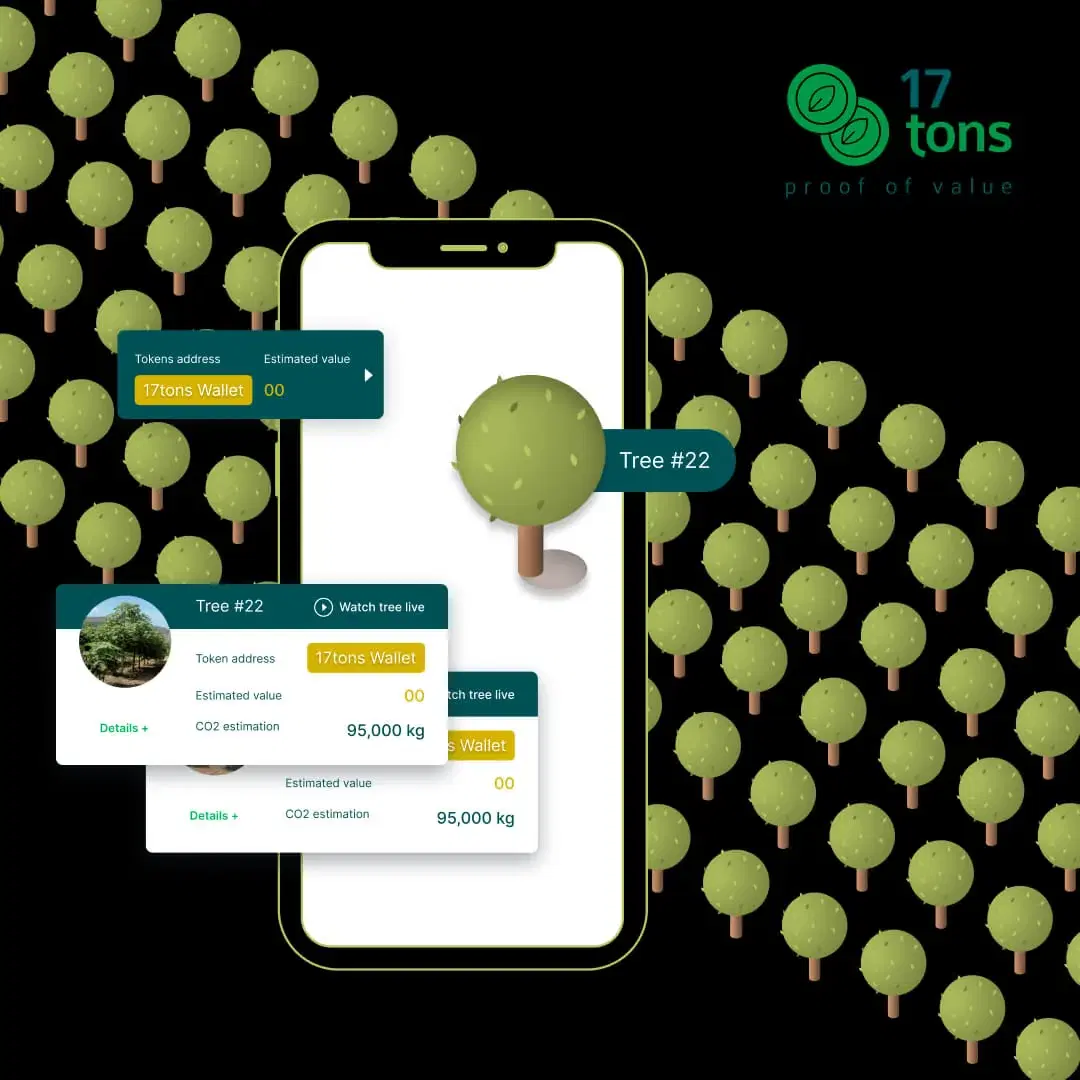
- 17Tons & WWG
WWG created for 17Tons a model of the project that replicated an app showing the whole process from planting trees onwards.
FAQ
Frequently Asked Questions
Related services
After the proof of concept
Once feasibility is settled, the next step is a desktop MVP. Which technologies to build it on is answered by analysis of the technology stack, inside the wider practice of desktop application development.
Tell Us What's Broken