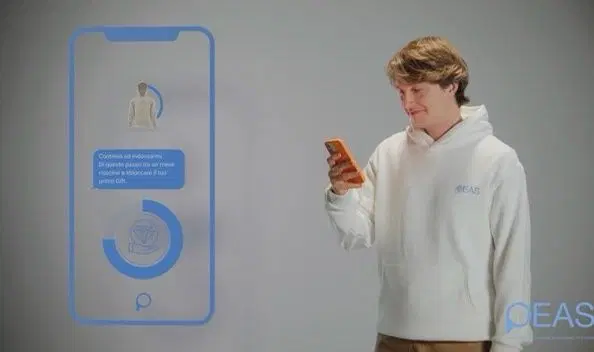
P.E.A.S., the Product Environmental Accountability System, is a research and development project on garment traceability: a system that records the history of a garment, from raw material to the uses that follow the sale, and makes it readable by the consumer through an NFC tag and a smartphone, encouraging longer use of clothes with game mechanics. WWG built it with 1TrueId, Mood, WRÅD and Politecnico di Milano, with the support of the Lombardy Region's Fashion Tech call. This page, published in February 2022, collects the press coverage; in 2026 we updated it with a summary of the project and the regulatory context that made it topical: the European digital product passport.
TL;DR
- P.E.A.S. tracks the origin and life of a garment with a distributed ledger and an NFC tag, and uses gamification to reward people who use their clothes longer.
- The project came out of the Lombardy Region's Fashion Tech call (ERDF 2014–2020), with WWG, 1TrueId, Mood, WRÅD and Politecnico di Milano.
- La Repubblica called it a manifesto of how our interaction with clothes will evolve; Collater.al a solution with considerable possibilities for fast fashion.
- Since 2024 the EU Ecodesign Regulation introduces the digital product passport, with textiles among the priority sectors: the problem P.E.A.S. addressed is becoming an obligation.
What does P.E.A.S. do and how does it work?
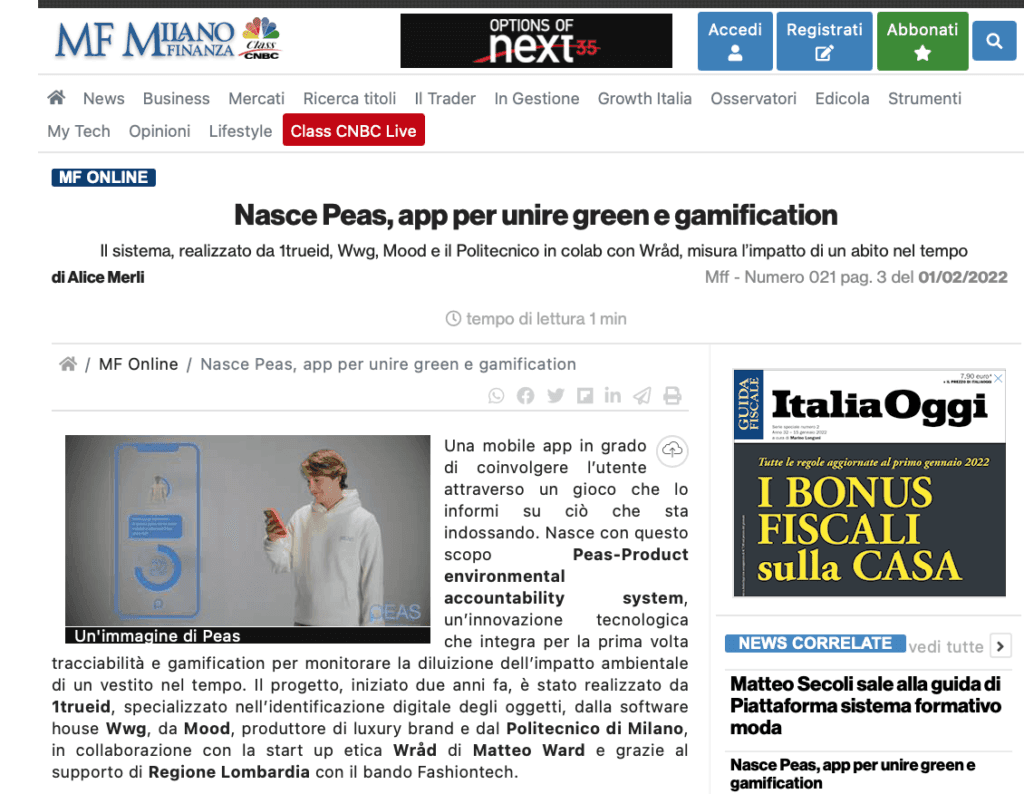
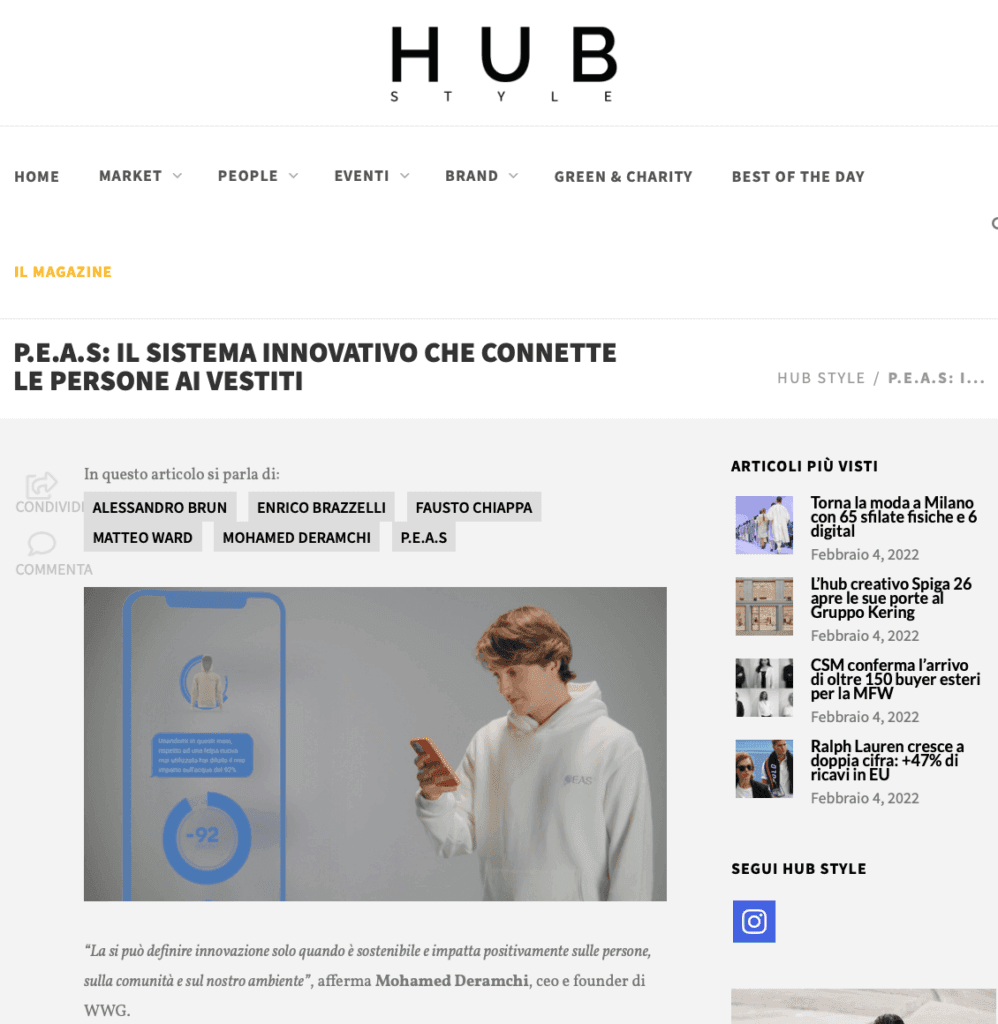
P.E.A.S. records every step in the life of a garment, from the cultivation of the raw material to production, sale and later reuse, in a certified ledger that borrows the blockchain method from finance and applies it to fashion. The information is accessible to the consumer through an NFC tag sewn into the garment and readable with a smartphone: the purchase becomes informed, ethical and responsible.
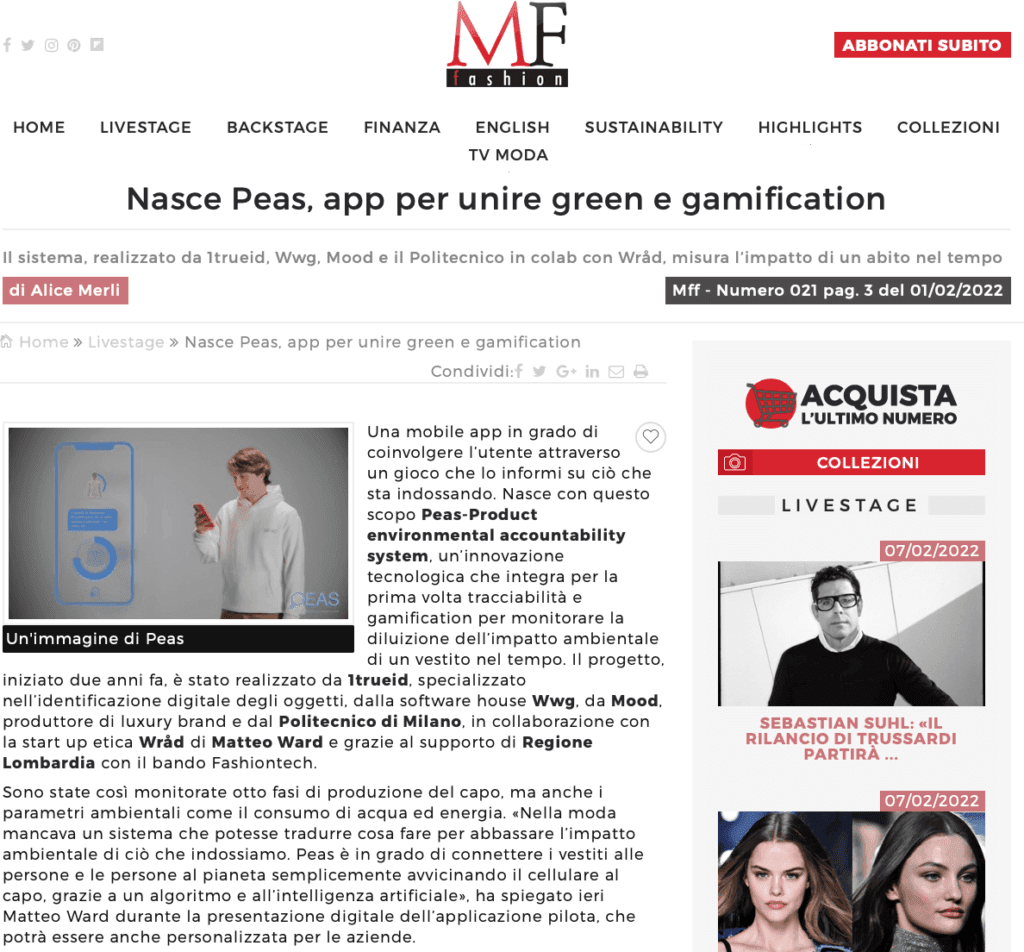
The second component is gamification: the system gives information and rewards to those who use a garment longer, repair it or pass it on, because length of use is the most effective lever for reducing the environmental impact of clothing. The project is described in the P.E.A.S. for Fashiontech case study and on the project website. (peas.global)
Who built the project and with what support?
The project was built by WWG together with 1TrueId, a specialist in digital product identity, Mood, WRÅD and Politecnico di Milano, thanks to the Lombardy Region's Fashion Tech call, funded by the ERDF 2014–2020 programme and aimed at innovation in the fashion sector from design to distribution. WWG handled the software and integration.
It is one of the research projects with universities and partners that WWG runs alongside client work, like the open innovation programme with Colmar and IULM. Sustainability in fashion is also covered in our article on AI in the fashion industry.
Why is P.E.A.S. more topical today than in 2022?
Because Regulation (EU) 2024/1781 on ecodesign requirements for sustainable products introduces the digital product passport, a set of information on materials, origin, repairability and end of life accessible from the product itself, and textiles are among the priority product groups for the first delegated acts. What P.E.A.S. tested in 2021, a digital identity of the garment readable by the consumer, is becoming a market requirement. (eur-lex.europa.eu)
For brands this means collecting structured supply-chain data, choosing a physical carrier, such as an NFC tag or a QR code, and a data architecture that makes the information verifiable. These are the three problems the project addressed, and the ones WWG now helps solve in custom software development projects for fashion.
Preparing your supply chain for the digital product passport? Talk to a WWG engineer at business@wwg.it.
Press coverage
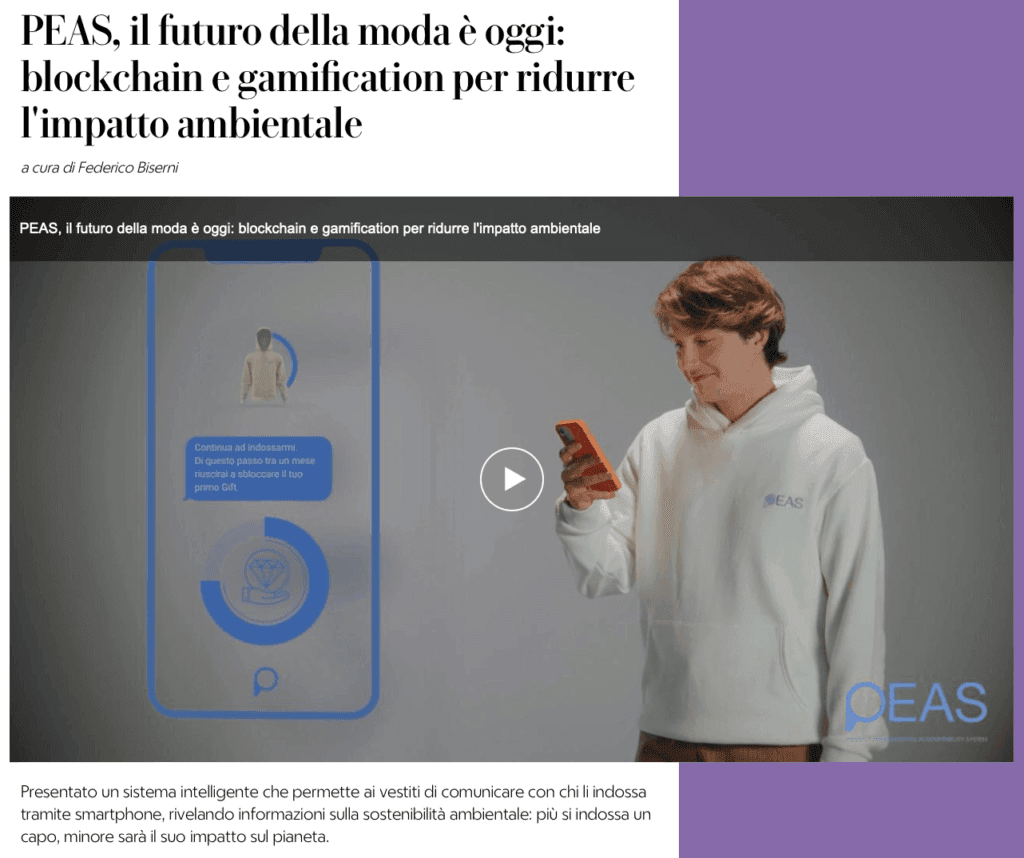
«Created with the support of the Lombardy Region by WRÅD, 1TrueID, Politecnico di Milano, WWG and Mood, PEAS is a manifesto of how, in the near future, will evolve the interaction with our clothes that will increasingly integrate the use of new technologies to communicate with us (and probably also with each other). And when it’s for a good cause, like this one, then it’s really good news.»
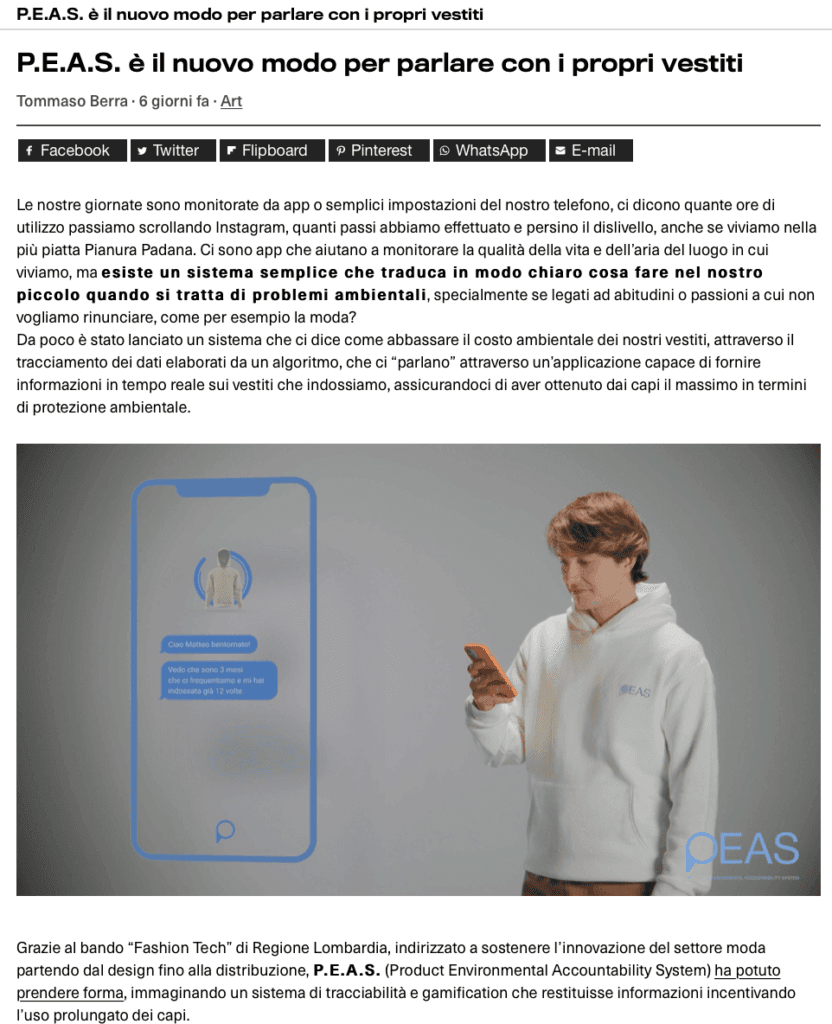
«A way to keep track of your clothes, their lives and improvements to the environment after each use. It is a solution that can open up considerable possibilities for fast fashion, a fashion sector naturally brought to continuous eruptions of merchandise that ends up unsold, irreparably polluting the environment.»
FAQ
Frequently Asked Questions
The Product Environmental Accountability System: a traceability system for garments that records the product's history in a certified ledger and makes it readable by the consumer through an NFC tag and a smartphone, using gamification to encourage longer use of clothes. It is a research and development project carried out with the support of the Lombardy Region.
WWG, 1TrueId, Mood, WRÅD and Politecnico di Milano, with the support of the Lombardy Region's Fashion Tech call funded by the ERDF 2014–2020 programme. WWG handled the software and integration; the project is described in the case study on this site and on the project website.
The digital product passport, introduced by EU Regulation 2024/1781, will require information on materials, origin and end of life to be accessible from the product, with textiles among the priority sectors. P.E.A.S. tested exactly this in 2021: a verifiable digital identity of the garment, readable by the consumer.